Hyundai ix-onic concept is a preview for the next generation Tucson crossover that will debut end of the year. Currently we don’t know how many styling cues will be taken from the concept to the production model, but we hope a lot. Questionable marketing decisions aside, the ix-onic, which previews the next Tucson crossover, is a winner. Aesthetically, it has some mildly derivative elements (the face has a certain Mazda quality about it), but it's a good-looking vehicle that comes off bigger and more muscular than its 173-inch length suggests. In other words, it's got presence.
The exterior also has some innovative touches, including headlamps with cool – if slightly contrived – moving internal elements (check out the video after the jump), and as well a coral-like asymmetrical grille mesh and very strong upswept greenhouse that shows off a clean, less hard-edged interior. That said, we could do without the heavy-handed chrome wheels that look like they were cribbed from the guys over at West Coast Customs.
Hyundai’s European designers have done a great job. ix-onic concept looks a lot bigger than it actually is. In fact it is only 4,400 mm long and 1,850 mm wide.
Interestingly, with the ix-onic, Hyundai designers are now going on record saying they are working toward defining a "hexagonal" front graphic as the company's new universal corporate face.
How the latter proclamation fits in with new offerings like the Genesis Sedan and Coupe or the Equus is something of an open question (perhaps this is just on designs for the European market), but as aesthetic signatures go, we can see this idea working to Hyundai's advantage, as the company's offerings currently don't really have a familial design element to tie them together.
The ix-onic – pronounced "ik-sonnik" – makes use of Hyundai's brand-new 1.6-liter GDi turbo four-cylinder, which routes its 168 horsepower through a six-speed double-clutch transmission (a bit of tech we don't recall seeing from Hyundai before), and the drivetrain has stop-start tech to help it yield a commendably low 149 grams-per-kilometer of C02. With Hyundai's previous admission that the company will move toward all direct-injection engines, we can expect to see this powerplant coming to America in the next Tucson, although perhaps not immediately.
MX-5 Mazda Superlight Concept Car, a superlight show car capturing the pure essence of the world's most popular roadster, the Mazda MX-5, will see its world premiere at the 63rd Frankfurt Motor Show, which will be held from 15 through 27 September 2009. After 20 years of global success, Mazda MX-5 is the best-selling two-seat sports car in the world. At Frankfurt, Mazda will present a new take on its affordable roadster in an all-new show car, the MX-5 Mazda Superlight Concept Car, designed at Mazda's studio in Oberursel, Germany.
A pure show car, it takes the lightweight technology that Mazda is famous for to a new level, which improves driving performance, handling, fuel economy and CO2 emissions. This is combined with a radical exterior design requiring no windshield, and sporty chassis settings for pure roadster driving fun.
BMW released today the official details and photos of the Vision EfficientDynamics Concept, a “new revolutionary concept car with BMW EfficientDynamics technology.” The new concept uses a a three-cylinder turbodiesel and two electric motors and the total output is 262 kW/356 hp, maximum torque 800 Newton-metres/590 lb-ft. All-wheel drive featuring an electric motor on both the front and rear axle. The sprint from 0 to 100 km/h is made in just 4.8 seconds while the top speed achieved is limited at 250 km/h (155 mph). Fuel consumption is impressive: 3.76 litres/100 km (equal to 75.1 mph imp), CO2 emissions 99 grams/kilometre. As a plug-in hybrid, BMW Vision EfficientDynamics is able to cover the entire fuel consumption drive cycle under electric power alone. Taking the sources of energy used for generating the electric power consumed into account (EU electricity mix), this reduces the CO2 emission rating to just 50 grams per kilometre. Electric power is generated without the slightest increase in fuel consumption through a particularly efficient concept of Brake Energy Regeneration. Energy is stored in 98 lithium polymer cells. The car is able to cover a distance of approximately 50 km/31 miles in the electric mode alone. The impressive performances are also available due to the drag coefficient optimised to just 0.22.
The ESF is based on the S 400 Hybrid. One of the ideas installed in the car is something called a Braking Bag. It is an air bag that sits within the ESF's floor and deploys when the car "decides" that a crash is imminent. By increasing friction with the road surface it helps to slow the vehicle down and also stabilises it.
Press Release
Perspectives: inflatable metal structures and braking airbags in the vehicle floor
2009 is a year in which Mercedes-Benz celebrates several anniversaries in the safety field: in August 1939 the safety pioneer Béla Barényi started his work in Sindelfingen. He invented for example the principle of the crumple zone, a trailblazing innovation which entered series production at Mercedes-Benz in 1959. With the help of its in-house accident research function, which was founded in 1969, Mercedes engineers in the following years have developed several groundbreaking innovations in passenger car safety. Now it is time for a look behind the scenes, and in this anniversary year, Mercedes-Benz is using the ESF 2009 research vehicle to reveal what its safety specialists are currently working on - with a time horizon that often extends well into the future.
The ESF 2009 is the first Experimental Safety Vehicle to be built by Mercedes-Benz since 1974. Like its historic predecessors, it illustrates trailblazing innovations in the field of safety and makes the progress achieved clearly visible. These amazing but by no means crazy ideas include inflatable metallic sections which give more stability to structural components within fractions of a second, as well as the so-called "Braking Bag". This airbag housed within the vehicle floor is deployed when a crash is deemed to be unavoidable, and uses a friction coating to support the vehicle against the road surface. The ESF 2009 will be premiered on 15 June 2009, at the Enhanced Safety of Vehicles (ESV) Conference in Stuttgart.
"Safety is a central element of the Mercedes-Benz brand. In this respect we have been setting the pace in the market for almost 70 years. For the benefit of our customers and for road users in general. The ESF 2009 shows that we still have plenty of ideas and the absolute will, to lead the automobile industry in this field even in future", says Dr. Dieter Zetsche, Chairman of Daimler AG and CEO of Mercedes-Benz Cars.
The ESF 2009 was developed and built completely in the test vehicle workshops in Sindelfingen. This safety research vehicle based on the Mercedes S 400 HYBRID features more than a dozen safety innovations, most of which are fully functioning in demonstration mode. "With the ESF 2009, we have chosen this particular time to clearly demonstrate the innovative strength of Daimler. Anybody examining the ESF 2009 in detail will recognise that more safety and improved energy efficiency are not necessarily a contradiction in terms. We want to make progress in both fields with new, trailblazing ideas ", says Dr. Thomas Weber, the member of the Daimler Executive Board responsible for corporate research and development at Mercedes-Benz Cars.
The following five innovations on the basis of the S 400 Hybrid are among the highlights of the ESF 2009:
* PRE-SAFE Structure:The inflatable metal structures save weight or increase the stability of structural components. When at rest, the metal section is in a folded state to save space. If its protective effect is required, a gas generator builds up an internal pressure of 10 to 20 bar within fractions of a second, causing the section to unfold for significantly more stability.
* Braking Bag:This auxiliary brake accommodated in the vehicle floor is a new type of PRE-SAFE® component. If the sensor system concludes that an impact is unavoidable, the Braking Bag is deployed shortly before the crash and stabilises the car on the road surface by means of a friction coating. The vehicle's vertical acceleration increases the friction, and helps to decelerate the vehicle before the impact occurs.
* Interactive Vehicle Communication: The ESF 2009 is able to communicate directly with other vehicles, or via relay stations. Using "ad hoc" networks and WLAN radio technology, it is e.g. able to receive and transmit warnings of bad weather or obstacles in the road.
* PRE-SAFE Pulse: This further development of PRE-SAFE® is able to reduce the forces acting on the torsos of the occupants during a lateral collision by around one third. It does this by moving them towards the centre of the vehicle by up to 50 millimetres as a precautionary measure. As an active restraint system, it uses the air chambers in the side bolsters of the seat backrests.
* Spotlight lighting function: This partial LED main beam specifically illuminates potential hazards. If the infrared camera of Night View Assist PLUSe.g. detects deer at the roadside or pedestrians on the road, these can be briefly illuminated beyond the normal area covered by the main beams, as if by a spotlight.
Mercedes-Benz is also presenting an innovative PRE-SAFE Demonstrator at the 21st ESVConference. For the first time this simulator uses a linear motor for this purpose, in order to accelerate the vehicle cabin to up to 16 km/h within a distance of four metres before the impact occurs. The linear drive system, which is similar to that used by the Transrapid train, is freely programmable and also works in the opposite direction. This enables various acceleration profiles and also a rear-end collision to be demonstrated. The special feature of this system is that the 'vehicle occupants' experience the effect of the PRE-SAFE® functions live, e.g. belt pretensioning, NECK-PRO and the inflatable side bolsters of the seats.
Mercedes-Benz is continuing a longstanding tradition with the ESF 2009: for the ESV Safety Conferences held in 1971 to 1975, the safety experts in Stuttgartbuilt more than 30 experimental vehicles and subjected them to crash tests to satisfy the visionary safety requirements of that time. Four of these ESFs (Experimental Safety Vehicles) were presented to the public, and many of the revolutionary ideas such as ABS or the airbag first entered series production at Mercedes-Benz. via:WorldCarFans
Mercedes announced today they have built the first Experimental Safety Vehicle since 1974 - the Mercedes ESF 2009 S400 Hybrid. The Mercedes S400 Hybrid ESF 2009 will be presented between 23 June 2009 and 16th of August in an exhibition in the company's Museum's Fascination of Technology section.
Existing features such as side impact bars could be inflated by pressures of between 10 and 20 bar, saving weight when they are deflated and allowing for other safety measures to be fitted in the saved space.
One of the most interesting systems is an auxiliary brake fitted into the floor of the car. The braking bag inflates when the car senses an imminent crash, creating friction and increasing deceleration. It also lifts the font of the car by up to 80mm, compensating for dive.
The interior, along with standard air bag and restraint systems is fitted with seat bolsters that shift the passengers about 50mm into the centre of the cabin should the car sense that a side impact is about to take place. The other safety features of interest arereflective tyres and air bags installed inside a seatbelts.
The love of motorsports starts at a young age for many racing fans, and countless enthusiasts owe their obsession to Hanna-Barbera's classic Wacky Races cartoons. The 60's-era animated series featured all manner of characters competing wheel to cartoon wheel in the most hilarious automotive concoctions ever rendered on celluloid. The complete set of the Wacky Races cars along with their respective characters will be displayed on purpose-built desert set at the Goodwood Festival of Speed that takes place on the 3rd to the 5th of July 3-5 July. Source: CarScoop via autoblog
Anybody can start sketching cars in their basement and call themselves a design studio. Of course it helps if you've got the clout and experience that comes with having steered an established coachbuilder like Pininfarina. But if you're going to make a dent in the increasingly troubled independent automotive design community, you're going to need a fancy facility to make it all happen. And that's just what Ken Okuyama has done.
The former Pininfarina chief stylist, since turned independent, has established an American arm to his expanding design enterprise, and they've set up shop at what used to be the Mercedes-Benz Advanced Design studio (which in turn moved into Chrysler's former Pacifica Advanced Design Center in Carlsbad).
The facility at 17742 Cowan Street in Irvine, California, (close to the line with Newport Beach) was purpose-built by Mercedes and boasts some 13,500 square feet of space right in the heart of Southern California's automotive design epicenter.
While Okuyama himself will presumably continue to work from his headquarters in Italy, he's assembled a crackerjack team to lead the American studio, including Neil Brooker, Michael Castiglione and Stuart Macey – the team credited with such work as the Porsche Carrera GT and Dodge Challenger, designs which clearly speak for themselves.
In addition to automotive design, the crew at Ken Okuyama Design USA will be working on furniture, eyewear and mass transit, among other things, as well as a custom coach-building operation to allow discerning (read: filthy rich) customers create their own one-of-a-kind rides. We'll expect to see more from the studio in the near future. via:autoblog
Anybody can start sketching cars in their basement and call themselves a design studio. Of course it helps if you've got the clout and experience that comes with having steered an established coachbuilder like Pininfarina. But if you're going to make a dent in the increasingly troubled independent automotive design community, you're going to need a fancy facility to make it all happen. And that's just what Ken Okuyama has done.
The former Pininfarina chief stylist, since turned independent, has established an American arm to his expanding design enterprise, and they've set up shop at what used to be the Mercedes-Benz Advanced Design studio (which in turn moved into Chrysler's former Pacifica Advanced Design Center in Carlsbad).
The facility at 17742 Cowan Street in Irvine, California, (close to the line with Newport Beach) was purpose-built by Mercedes and boasts some 13,500 square feet of space right in the heart of Southern California's automotive design epicenter.
While Okuyama himself will presumably continue to work from his headquarters in Italy, he's assembled a crackerjack team to lead the American studio, including Neil Brooker, Michael Castiglione and Stuart Macey – the team credited with such work as the Porsche Carrera GT and Dodge Challenger, designs which clearly speak for themselves.
In addition to automotive design, the crew at Ken Okuyama Design USA will be working on furniture, eyewear and mass transit, among other things, as well as a custom coach-building operation to allow discerning (read: filthy rich) customers create their own one-of-a-kind rides. We'll expect to see more from the studio in the near future. via:autoblog
Anybody can start sketching cars in their basement and call themselves a design studio. Of course it helps if you've got the clout and experience that comes with having steered an established coachbuilder like Pininfarina. But if you're going to make a dent in the increasingly troubled independent automotive design community, you're going to need a fancy facility to make it all happen. And that's just what Ken Okuyama has done.
The former Pininfarina chief stylist, since turned independent, has established an American arm to his expanding design enterprise, and they've set up shop at what used to be the Mercedes-Benz Advanced Design studio (which in turn moved into Chrysler's former Pacifica Advanced Design Center in Carlsbad).
The facility at 17742 Cowan Street in Irvine, California, (close to the line with Newport Beach) was purpose-built by Mercedes and boasts some 13,500 square feet of space right in the heart of Southern California's automotive design epicenter.
While Okuyama himself will presumably continue to work from his headquarters in Italy, he's assembled a crackerjack team to lead the American studio, including Neil Brooker, Michael Castiglione and Stuart Macey – the team credited with such work as the Porsche Carrera GT and Dodge Challenger, designs which clearly speak for themselves.
In addition to automotive design, the crew at Ken Okuyama Design USA will be working on furniture, eyewear and mass transit, among other things, as well as a custom coach-building operation to allow discerning (read: filthy rich) customers create their own one-of-a-kind rides. We'll expect to see more from the studio in the near future. via:autoblog


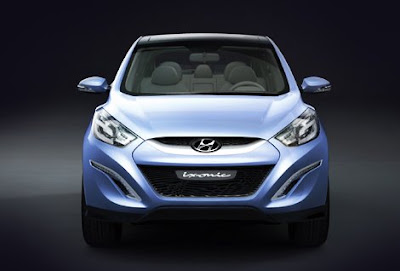 Hyundai iX-Onic Concept Car
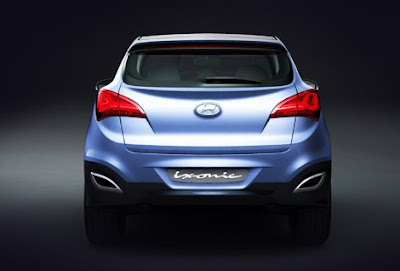 Hyundai iX-Onic Concept Car - Rear View
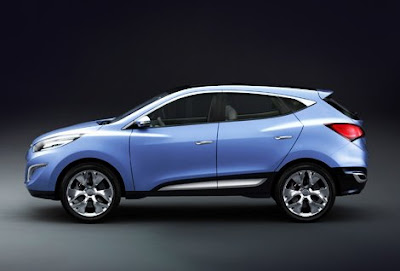 Hyundai iX-Onic Concept Car - Side View
 Hyundai iX-Onic Concept Car - Front Left View
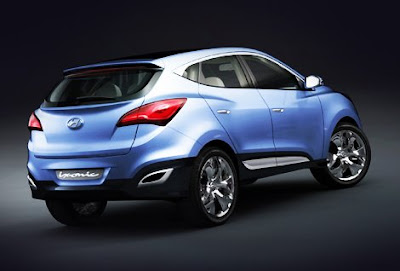 Hyundai iX-Onic Concept Car - Rear Right View


